All Essays
The Floor Beneath the Leap
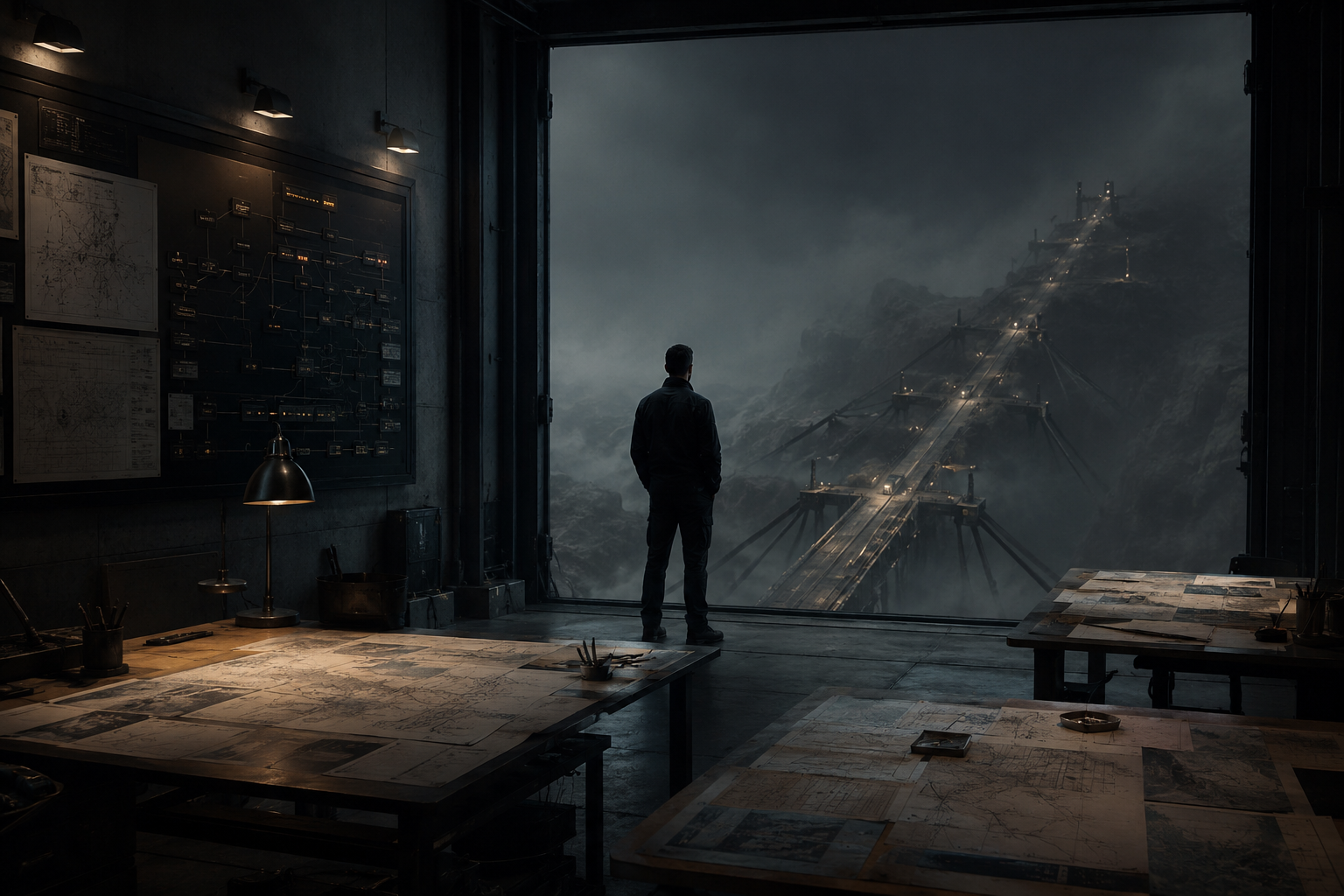
Taking a risk requires courage. But courage alone does not address the question that separates deliberate risk from recklessness: what happens if this does not work? A person can see the risk clearly, accept the exposure, and commit fully—and still have no plan for what failure looks like or when to walk away. That is not bravery. That is an incomplete decision.
After the Door Closes
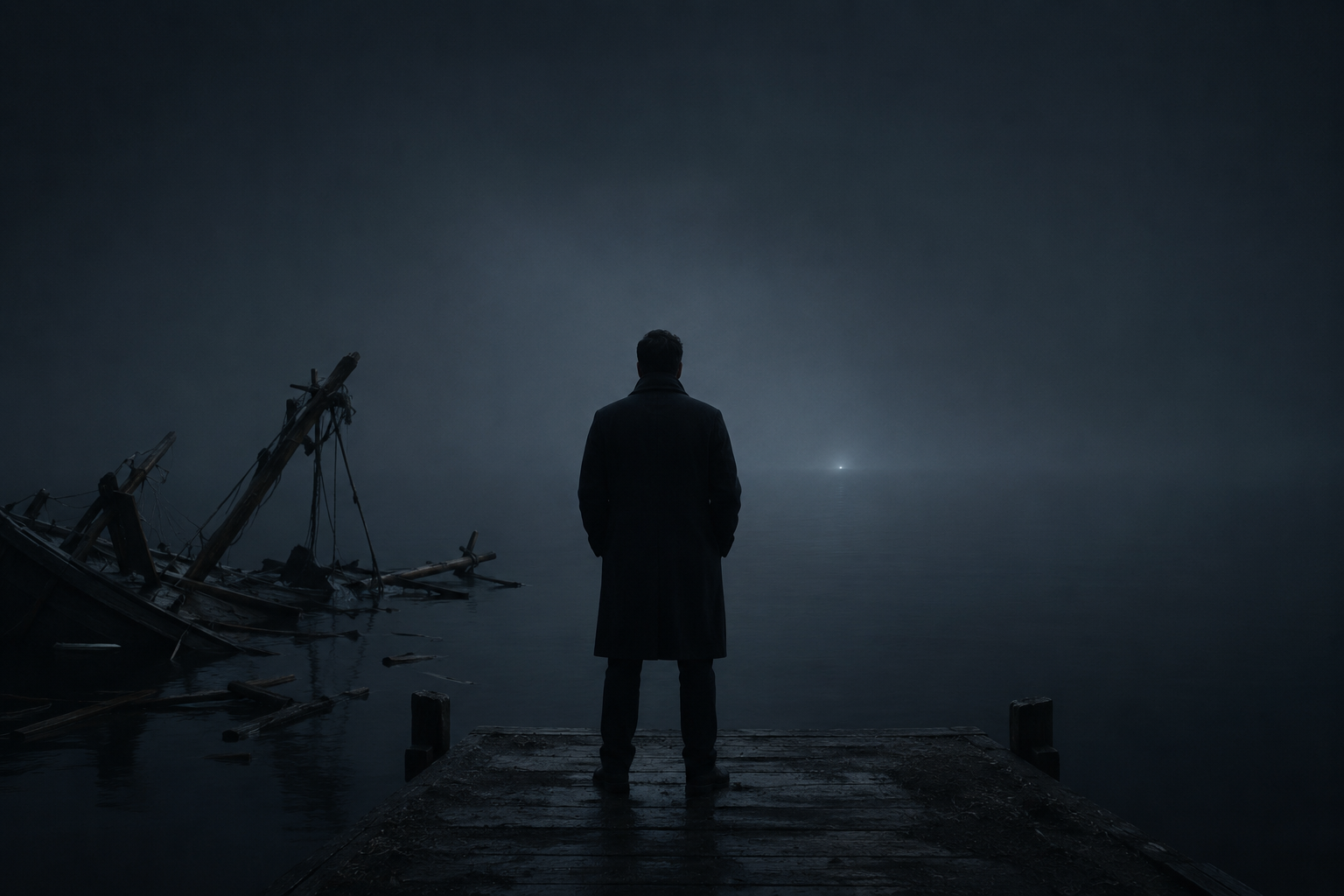
Most people do not fail because the risk was wrong. They fail because they divide their commitment between the goal and the escape route. Conviction after risk means refusing to negotiate with the decision once it has been made.
The Risk of No Risk
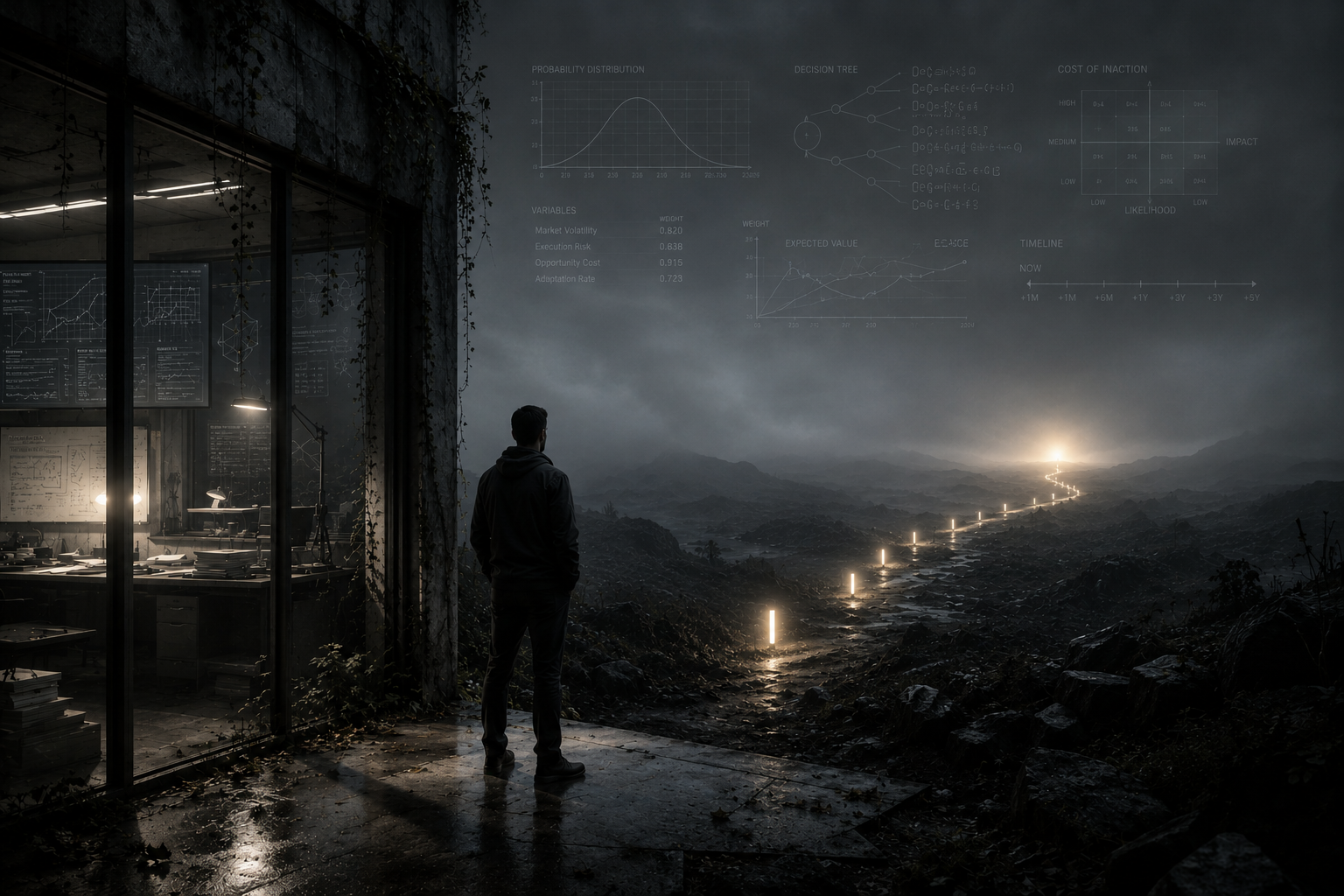
Risk is usually framed as the cost of acting. What is less visible—but often more expensive—is the cost of not acting. The person who does not apply, does not invest, does not have the conversation, does not release the work has not avoided risk.
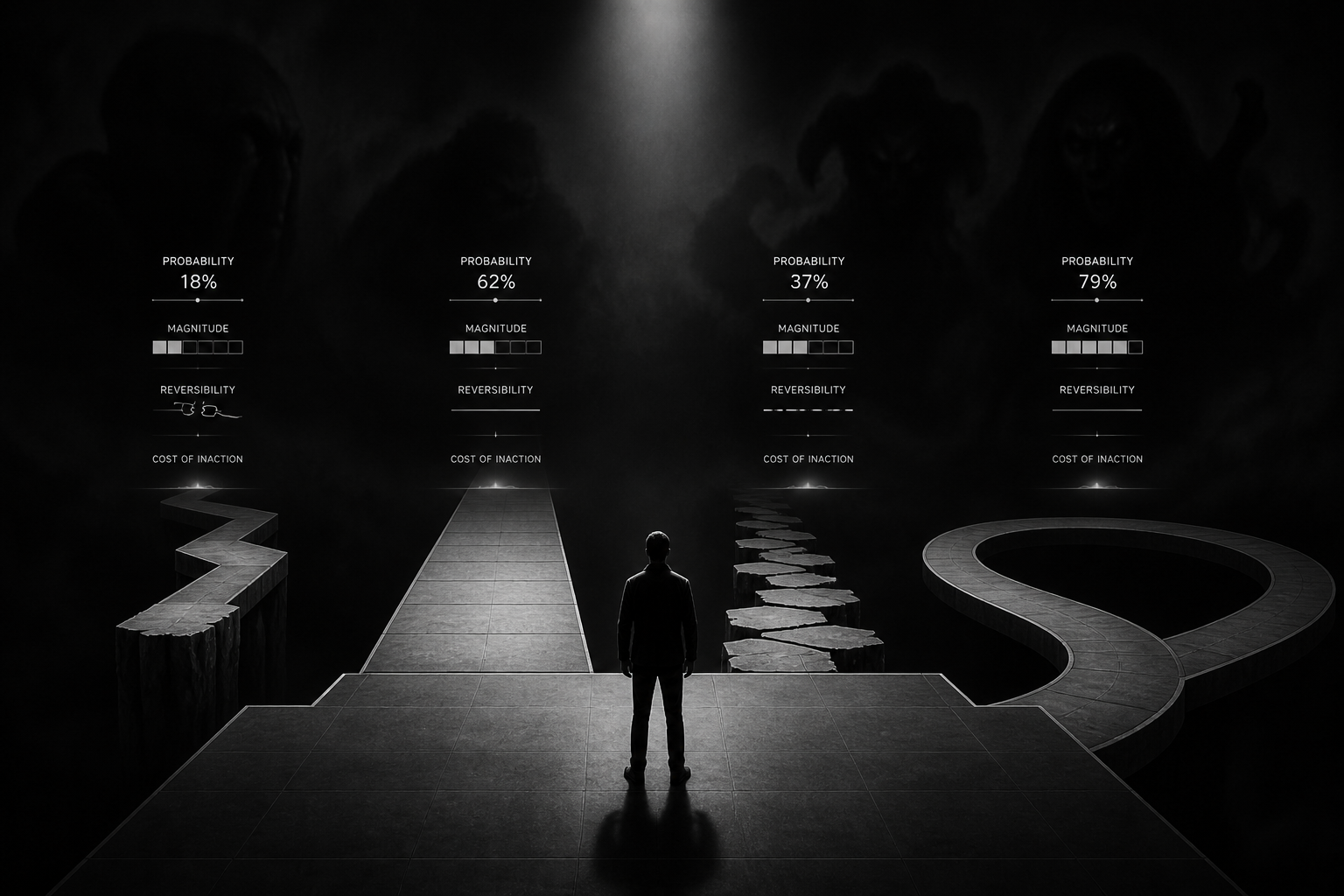
The Anatomy of Exposure
Most people do not avoid risk because they are cowards. They avoid it because they have not accurately assessed what the risk is. Fear fills the gap where clarity should be. When a person cannot precisely name what they stand to lose, what they stand to gain, and what the probabilities look like, fear supplies its own estimates—and those estimates are almost always inflated.

Do the Right Thing
Doing the right thing isn’t always easy—or obvious. This essay explores how to align decisions with your values, prepare for the costs, and handle resistance with integrity. You’ll find practical reflection prompts and insights to help you stay the course when it matters most.