
All Essays

Inertia with a Schedule
The ethical risk of execution isn't stopping—it's forgetting to verify direction. How consistent execution becomes dangerous when the rhythm becomes the justification.

The Design Problem
Every morning a person wakes up and decides whether to do the work, that person has created a system with a failure point built into every day. The decision may go well on Monday. It may hold on Tuesday. By Thursday, when sleep was short and the week has accumulated, the decision becomes harder—not because the commitment has changed, but because the conditions have.
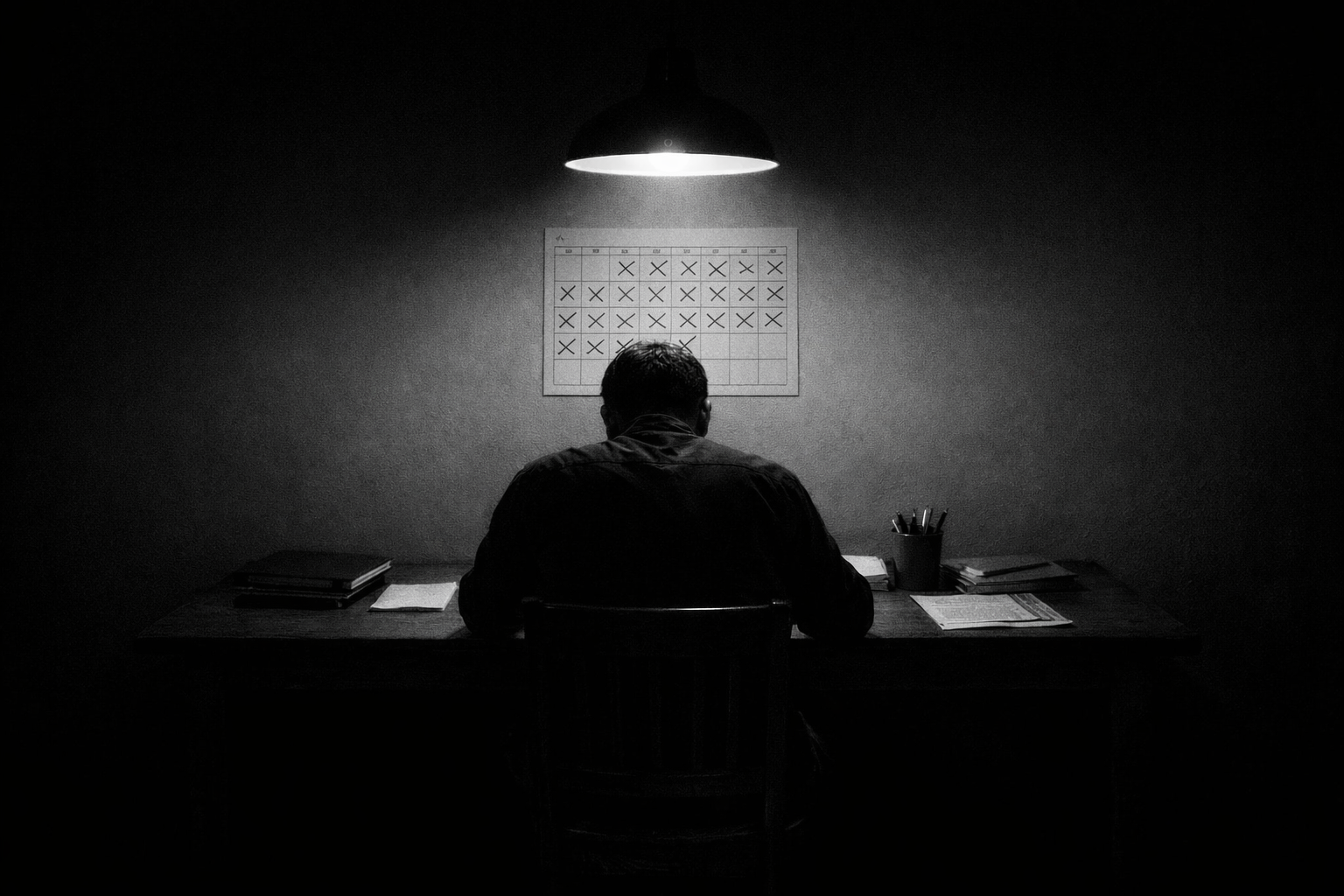
The Agreement You Already Made
The first week of execution runs on momentum. The second week runs on discipline. By the third week, neither is reliable. Momentum has dissipated entirely. Discipline, which felt solid, has started to bend. The work is no longer new and the results are not yet visible. What carried you here cannot carry you further.

Silence Before Results
Starting is not the hard part. Starting has energy—the novelty of action, the relief of finally doing something after months of preparation. The hard part is the second day. And the fifth. And the fourteenth. The days when the work is no longer new and the results have not yet arrived.

The First Thing You Finish
You have defined the goal. You have identified what it demands. You have formed a picture of the future it creates. But this morning, you woke up in the same room, with the same calendar, and the same twenty-four hours as yesterday. The vision is vivid. The path forward is not.